
Do you think you know your history? Guess not! Over the decades, numerous facts have been mended, exaggerated, and even entirely fabricated and dramatized. The majority of these misconceptions are trusted by the masses, and in some weird situations, these have even ended up in history books. Do you think that Lincoln set free the slaves? The Wild West is known for street gunfights. If yes, then it’s time to reckon again with your false beliefs. Don’t worry, we have brought a list of 15 important historical facts that are totally wrong:
15. Napoleon Was Exceptionally Short
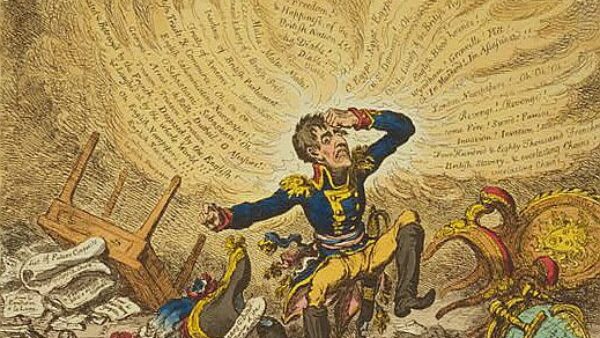
For centuries, Napoleon Bonaparte has been described as a short man with a fiery temper. The claim about his height doesn’t really hold up. French records put him at a little over five feet two inches, but the French foot and inch were longer than the British units in use today.
Once you convert the figure, it comes to about five feet six inches, which was roughly average for a French man of that era. Still, British cartoonists took great delight in making him look tiny. James Gillray’s depictions of “Little Boney” helped cement that image.
14. Vikings Wore Horned Helmets
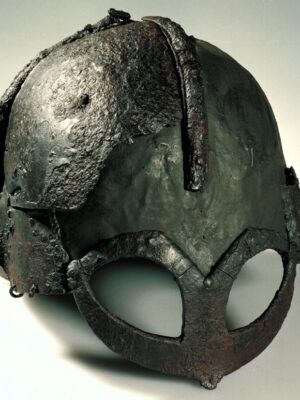
Image Source: NTNU Vitenskapsmuseet via Wikimedia Commons
You might want to reconsider that Viking helmet sitting in your costume box. Archaeologists have uncovered no proof that Viking warriors routinely wore horned helmets. The Viking Age helmet unearthed at Gjermundbu in Norway features a guard around the eyes and nose, yet it has no horns.
Its familiar appearance stems largely from art and theater. In the 1800s, painters depicted horned helmets, and costume designer Carl Emil Doepler dressed characters in them for an 1876 production of Wagner’s Ring operas. It’s easy to see why the costume became so popular. It is impossible to overlook.
13. The Salem Witches Were Burned at the Stake
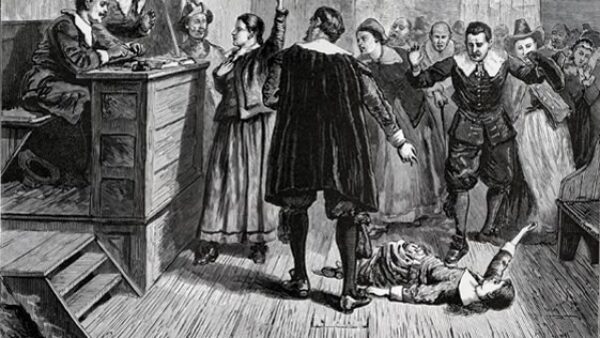
Image: Illustration from William A. Crafts, 1876.
The Salem witch trials were horrific in their own right, so there was no need for a burning at the stake on top of that. Nineteen individuals found guilty of witchcraft were hanged in 1692. Not a single person condemned in Salem was burned.
Giles Corey, another man who was accused, was crushed to death under heavy stones after he would not agree to stand trial. Still others perished in prison. Some European witch trials did employ burning, which may explain why the two sets of practices are often confused.
12. Wild West & The Notorious Gun Fights

It’s an understood fact today that most of you would say the word “gunfight” after hearing the Wild West. Honor, fantasy setting, and corrupt sheriff – to our surprise, this all has been exaggerated by everyone’s favorite, Hollywood.
Violence varied from place to place, and some mining and cattle towns had high murder rates. Other towns required visitors to leave their guns with a hotel or a lawman. The familiar street duel did happen, but movies made it look much more common.
11. White Marble Statues Dazzled Ancient Rome

Ancient Rome has always been famous for its white marble statues; at least this is what most common people believe. If you, too, are among them and also think the same, then it’s time to mend your knowledge. The reality is that many Roman marble statues were painted. Some were covered in color, while others had paint on details such as the hair and eyes. Much of that color has worn away over the centuries.
Traces of pigment help researchers work out how the statues once looked. Museums have even made painted reconstructions, though the exact colors and patterns can be hard to recover.
10. Christopher Columbus’s Round World

The bogus news of the century. Ancient Greek scholars knew that Earth was round long before Columbus. Eratosthenes estimated its circumference in the third century BC; he did not discover its shape.
Columbus had trouble getting his voyage funded in part because he underestimated the distance to Asia by sailing west. Spanish advisers questioned his calculations, though the monarchy eventually funded his expedition.
9. Paul Revere’s Popular Ride

The poem is written by Longfellow and is among the first things that are learned by students in schools about the American Revolution. However, the poem did omit some facts. Revere was one of several riders who spread the alarm, and the church lanterns were a backup signal, not a message he waited to see.
A British patrol captured Revere in Lincoln before he reached Concord. Samuel Prescott, another rider, got through and carried the warning there.
8. The Existence of Triceratops

If you heard that Triceratops never existed, your childhood is safe. The rumor grew out of a debate about how to classify some horned dinosaur fossils.
In 2010, two paleontologists proposed that fossils named Torosaurus belonged to older Triceratops. Other researchers disagreed. Even if the two names describe the same dinosaur, Triceratops was named first and would keep its name. Dr. Grant can relax!
7. Light Bulb Invented by Thomas Edison

It is going to be a real shock for many people, we know, but despite being a genius inventor, the light bulb wasn’t invented by Thomas Edison. For fifty years before this breakthrough emerged to the public, many scientists were already curiously experimenting with electricity for generating light.
Charles Brush was working on arc lighting before Edison developed his incandescent light. Edison and his team built a long-lasting practical bulb and a system for using it, while other inventors, including Joseph Swan, also worked on incandescent lamps.
6. All of America’s Founding Fathers Had the Same Christian Beliefs

We are sure that this is going to be aggressively objectionable to so many readers. But the truth cannot be changed. America’s founding fathers did not all share the same religious beliefs. This has been confirmed in their writings. Thomas Jefferson believed that Jesus was a symbol of immense morality, although he said that the Bible’s history is dubious and the Book of Revelation was the work of a fanatic.
Benjamin Franklin was a Freemason and had doubts about the divinity of Jesus. John Adams held Unitarian beliefs. George Washington belonged to the Anglican, later Episcopal, church, though the details of his personal beliefs are debated.
5. Albert Einstein Failed in Maths

Seriously? Do you think so? How can it be possible that a maths genius failed in the subject? Exam phobia? Difficult questions? No matter how you twist it, the truth is the truth, and Einstein rocked it! The claim appeared in the famous Ripley’s Believe It or Not column.
When shown the claim, Einstein said he had never failed in mathematics and had mastered differential and integral calculus before the age of 15.
4. Lincoln Freed All Enslaved People With One Decree

A thousand bets on this one! Lincoln’s Emancipation Proclamation of 1863 did free enslaved people, but it applied to designated areas in rebellion, not every state. It could be enforced where Union forces had control, and more people gained freedom as those forces advanced.
The 13th Amendment, ratified in 1865, abolished slavery throughout the United States, except as punishment for a crime after conviction.
3. Bell Invented the Telephone on His Own

Alexander Graham Bell was not the only inventor working on a way to transmit voices electrically. Antonio Meucci began developing a talking telegraph before Bell received his patent, and Johann Philipp Reis also experimented with transmitting speech.
Bell received a U.S. patent in 1876 and demonstrated a working telephone. The history involves several inventors, but the claim that Bell simply stole Meucci’s invention is not established.
2. Egyptian Slaves Built Pyramids

We have grown up watching movies in Hollywood that always showed that Egyptian slaves built the Great Pyramids. However, archaeologists have found living quarters and tombs connected to workers near the Giza pyramids.
Evidence from the workers’ settlement suggests that many builders were organized, housed, and fed by the state. That does not tell us the status of every worker, and some labor may have been required as a duty to the state.
1. Newton’s Theory of Gravity And The Apple

Wrong to dismiss the apple story entirely. Newton’s acquaintance William Stukeley recorded that Newton had told him a falling apple helped set him thinking about gravity. John Conduitt, Newton’s relative, also recorded a version of the story.
There is no definite evidence that the apple hit Newton on the head. The account describes a moment of reflection, not proof that he worked out the whole theory on the spot.
Do you know of any popular historical fact that isn’t true in reality? Share with us a few in the comments section below!
Title Image Courtesy: Flickr/Jaroh
I would also like to mention one more fact that isn’t actually correct:
Contrary to popular belief, last names were routinely changed at Ellis Island by immigration officers.
Yeah, another approval of Napoleon’s quote “History is the version of past events that people have decided to agree upon”.
My life will never be the same! :)))
I bet you will find far more fake facts if continue searching!
Even in the Holy Bible there are contradictions!
Human beings maintain Bible and release its various versions from time to time, and the original version of Bible doesnt exist any more, so mistakes in HOLY Bible are obvious!