
Predators. As a child, the stories you heard about them caused you to be afraid of the dark and imagine monsters under the bed. Across all cultures, humans are fascinated with the kings and queens of the natural world. We celebrate the lion as the king of the jungle or the bear as the symbol of Russian military power during the Cold War. Even America’s Bald Eagle is a fearsome predator with a nasty bite. Think about that for a second: a nasty bite. That’s what scares us. In the natural world, human beings can be prey as well as predators. Our wits and tools help us stay safe around these animals. That being said, here are teeth you don’t want to be bitten by:
15. Tasmanian Devil
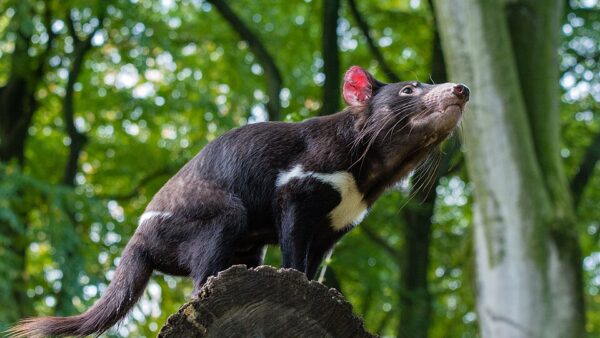
- What it is: a carnivorous marsupial with powerful jaws
- Where they live: Tasmania, with a small reintroduced population on mainland Australia
- When they are most sighted: usually at night
A Tasmanian Devil may appear small in comparison to the other creatures on this list, yet its jaws are capable of breaking through bone. Those fangs allow it to rip into flesh and consume much of a carcass.
Devils hunt small animals, but they also feed on dead animals. If several turn up for the same meal, you may hear their screeches before you see them.
14. African Wild Dog
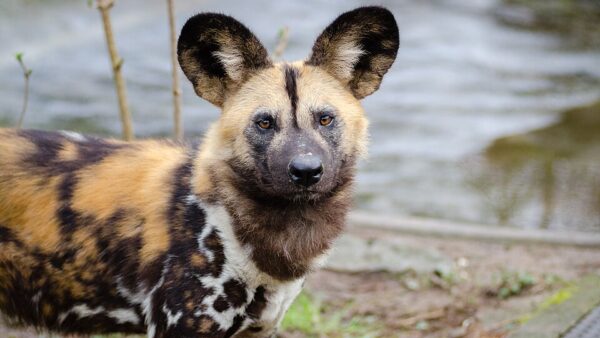
- What it is: a pack-hunting canine also known as the painted dog
- Where they live: parts of eastern and southern Africa
- When they are most sighted: early morning and evening
African Wild Dogs don’t rely on one set of teeth. They hunt in packs, chasing animals such as antelope until the prey tires. Once they catch it, the dogs use their sharp teeth to tear into their meal.
These canines are endangered, and the remaining groups require space to roam. Habitat destruction and confrontation with people have made life more difficult for them.
13. Wolverine
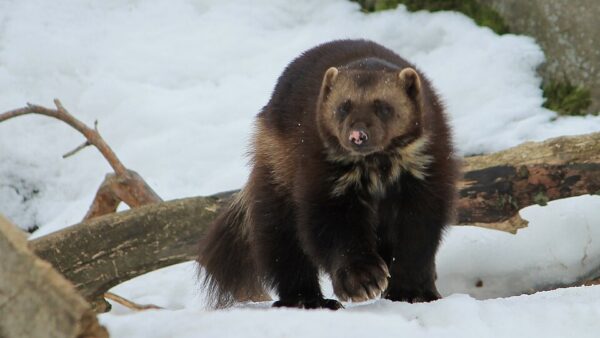
- What it is: a powerful member of the weasel family
- Where they live: cold regions of North America, Europe, and Asia
- When they are most sighted: active year-round, though sightings are rare
Wolverines have powerful teeth and jaws that allow them to chew frozen meat and bone. That’s a valuable talent when your food has been left out in the snow.
They chase smaller animals and scavenge when they discover a carcass. Wolverines typically travel alone, and their remote habitat makes them difficult to find.
12. Cougar
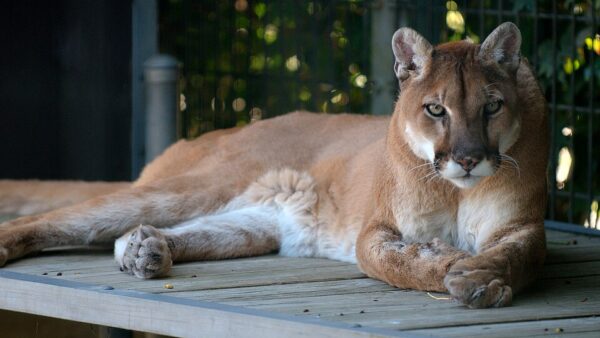
- What it is: a large cat also called a puma or mountain lion
- Where they live: parts of North, Central, and South America
- When they are most sighted: around dawn and dusk
A Cougar moves quietly through cover before leaping onto its prey. Deer are a favorite meal, and the cat uses a bite to the neck to bring one down.
As unpleasant as it seems, attacks on people are rare. Most of the time, a Cougar will keep its distance, and you may never realize it was there.
11. Grizzly Bear
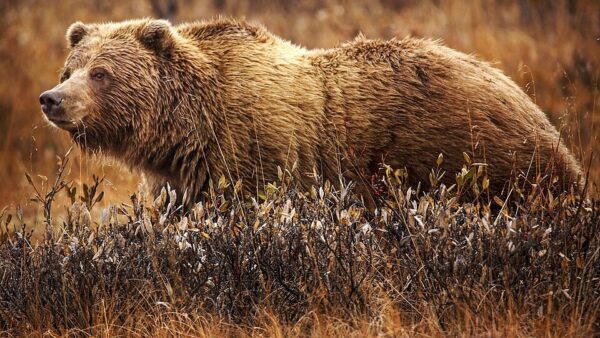
- What it is: a large North American brown bear
- Where they live: Alaska, western Canada, and parts of the western United States
- When they are most sighted: throughout the warmer months, when they are out searching for food
A Grizzly Bear’s teeth can withstand much more than flesh. These bears consume roots, berries, and other vegetation, as well as fish and any carcasses they come upon.
That doesn’t make a close encounter safe. A bear protecting its food or cubs can react defensively, and its size and jaws can cause serious injuries.
10. Tiger
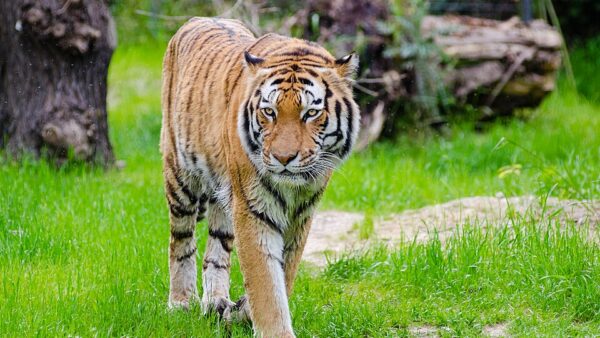
- What it is: the largest living cat
- Where they live: parts of Asia, from forests to grasslands
- When they are most sighted: often active at night, though they also move during the day
Stripes help a Tiger disappear into long grass as it stalks its prey. When it gets close enough, it may use its big canine fangs and strong jaws to grab the animal by the neck.
Tigers usually hunt alone and take animals such as deer and wild pigs. With a mouth and set of teeth like that, one Tiger is plenty.
9. Polar Bear
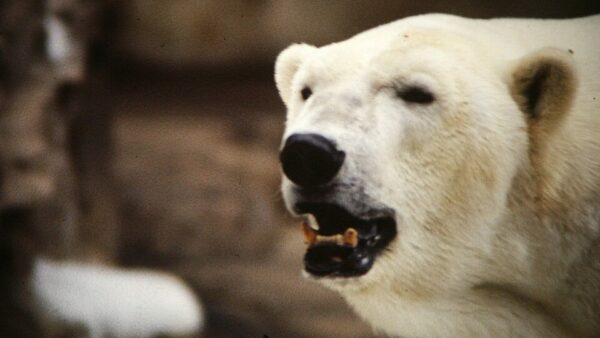
- What it is: a large Arctic bear that hunts seals
- Where they live: Arctic sea ice and coastal areas
- When they are most sighted: they can be active during the day or at night
A Polar Bear may wait beside a hole in the sea ice for a seal to come up for air. When the seal appears, the bear has the teeth and strength to catch it.
Seals make up much of its diet, although a Polar Bear will eat other food when it gets the chance. When taking a stroll on the ice, you don’t want to startle this particular animal.
8. Jaguar
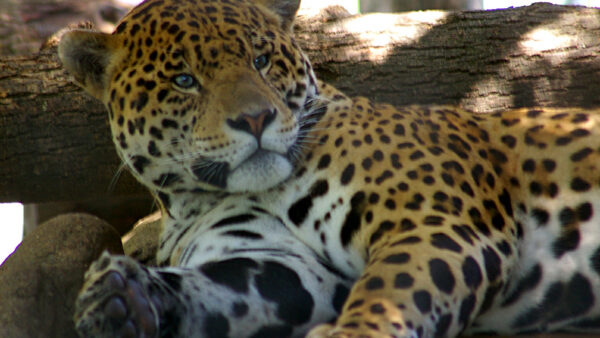
- What it is: a big cat with exceptionally powerful jaws
- Where they live: parts of Mexico, Central America, and South America
- When they are most sighted: they hunt during both day and night
A Jaguar has a bite that can pierce the skull of its prey. Its strong jaws help it tackle animals ranging from mammals to reptiles, including caimans.
Jaguars are good swimmers, too, so water isn’t much of a barrier when they’re looking for food. They frequently hunt close to marshes and rivers.
7. Spotted Hyena
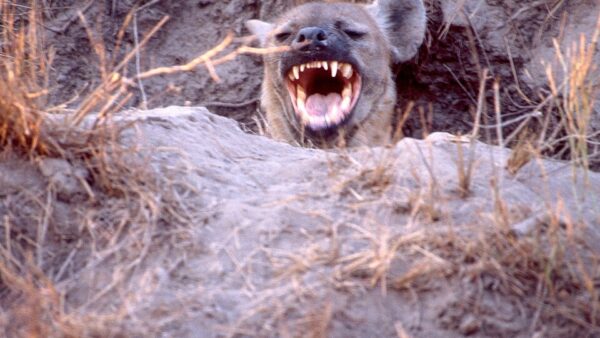
- What it is: an African carnivore with bone-crushing jaws
- Where they live: much of sub-Saharan Africa
- When they are most sighted: generally at night, though they can be active during the day
Spotted Hyenas can crack open bones that many other animals leave behind. They can consume a large portion of a corpse, even the difficult sections, thanks to their strong teeth and jaws.
They’re often called scavengers, but they hunt as well. A group can chase down prey together, and lions sometimes steal food from them rather than the other way around.
6. Great White Shark

- What it is: a large predatory shark with serrated teeth
- Where they live: coastal and offshore waters in oceans around the world
- When they are most sighted: active during the day and at night
The Great White Shark’s broad, triangular teeth have serrated edges that help it cut through prey. Larger Great Whites often feed on seals and sea lions, while younger sharks eat more fish.
A bite from one can cause severe injuries, although shark bites on people are rare. The reputation is enough to make you think twice about a dark shape under the water.
5. Saltwater Crocodile

- What it is: the largest living reptile
- Where they live: parts of South and Southeast Asia and northern Australia
- When they are most sighted: in or near water, sometimes basking on the bank
Don’t let the name fool you. Saltwater Crocodiles also live in freshwater rivers and swamps, where they can wait almost completely hidden beneath the surface.
When prey comes close, those huge jaws clamp down. A crocodile may also roll in the water to tear pieces from a meal it can’t swallow whole.
4. Bull Shark

- What it is: a large shark known for entering shallow water
- Where they live: coastal salt and freshwaters
- When they are most sighted: active at different times of day and night
Bull Sharks inhabit coastal waters and occasionally enter rivers. They have a powerful bite, and they eat a wide range of prey.
They may not be the worst offenders for attacks on humans, but it’s their shallow habitat and size that make them so fearsome. Fatal shark bites are rare.
3. African Rock Python

- What it is: a large, nonvenomous constrictor
- Where they live: native to sub-Saharan Africa, invasive to southern Florida
- When they are most sighted: generally active at night
Constrictor snakes often bite before wrapping their prey in their coils. Rock Pythons can be quick to bite when cornered or handled.
Rock Pythons usually eat mammals and birds, and large adults can take sizable prey. Reports of attacks on people are rare.
2. Inland Taipan

- What it is: the snake with the most toxic venom in laboratory tests on mice
- Where they live: inland Queensland and South Australia
- When they are most sighted: most active in the early morning, and sometimes in the afternoon during cooler weather
Although reclusive, Taipans are quite vicious when they hunt. They are known to bite their prey several times in quick succession. Since they live in such remote areas of Australia, encounters with people are uncommon.
The venom is highly toxic, and a bite can be life-threatening, but prompt medical treatment and antivenom can save lives.
1. Hippopotamus

- What it is: a large, territorial African mammal
- Where they live: sub-Saharan Africa
- When they are most sighted: often resting in water by day and grazing after dark
Nobody messes with a Hippo. Lions and crocodiles may prey on young Hippos, but adults are dangerous opponents. Their massive mouths can open up to 150 degrees, and their large teeth can cause serious injuries.
The hippopotamus is also highly aggressive and territorial, so much so that it has been known to attack riverboats.