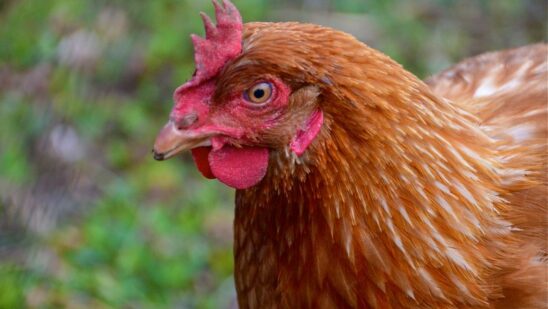
We human beings are undoubtedly true animal lovers, with many homes owning a pet or two, whether it’s dogs, cats, rabbits, hamsters, guinea pigs, fish, or even chickens! But how much do we know about our feathered friends? There is a lot more to chickens than meets the eye – check out these 120 interesting facts about chickens:
#120
The red junglefowl of Asia is the primary wild ancestor of the domestic chicken. Its scientific name, Gallus gallus, helps account for the domestic chicken’s name, Gallus gallus domesticus.
#119
A few chickens also carry a small amount of grey junglefowl ancestry. A genetic study traced the yellow skin common in many domestic chickens to DNA most likely inherited from this other junglefowl species.
#118
Rice farming may have played a part in bringing chickens into our lives. Researchers propose that cultivating and storing grain attracted wild junglefowl to human settlements, allowing domestication to get underway.
#117
Chickens were not always an obvious pick for dinner. An archaeological study of Europe and northwest Africa found that in some places people kept them as exotic birds for centuries before they began eating them regularly.
#116
The chicken was the first bird whose genome was sequenced. Scientists released the first draft in 2004, offering researchers a new way to study both poultry and vertebrate evolution.
#115
A chicken typically has 39 pairs of chromosomes. Many of these are tiny microchromosomes, so a picture of its chromosomes looks quite different from a human one.
#114
Among chickens, females carry ZW sex chromosomes and males carry ZZ. The hen provides the egg with either a Z or a W chromosome, and this decides the genetic sex of the chick.
#113
At hatch, some chicks can be sexed according to the length of their wing feathers. This method applies to specific crosses bred so that males and females differ in feather growth rate, not to every chick.
#112
A chicken’s comb need not resemble a row of spikes. Various breeds may have low rose combs, small pea combs, or other shapes.
#111
Even though it resembles fur, a Silkie’s fluffy coat is actually made of feathers. Its feathers do not have the usual functioning hooklets that bind the barbs into a smooth sheet.
#110
Beneath those soft feathers, Silkies have dark skin and dark bones. This uncommon distribution of pigment is known as fibromelanosis, and it can appear under white plumage.
#109
Silkies typically have five toes on each foot. Since most chickens have four, counting toes can reveal something about a bird’s breed.
#108
Frizzle feathers curl back toward the chicken’s head. The trait is inherited and can show up in various breeds, so that windswept appearance does not come from a bad morning.
#107
The large feather crest of the Polish chicken can obstruct its vision. A bird with a heavy crest may be easily startled, since it cannot see what is coming toward it.
#106
Hens of the Araucana and Ameraucana breeds are able to lay blue eggs. They are distinct breeds, although both are famous for bringing colour to an egg basket.
#105
Marans chickens are renowned for eggs with dark brown shells. The breed gets its name from the French town of Marans, and a few of its eggs appear almost chocolate coloured.
#104
The term “Bantam” applies to many types of small chickens. Some are miniature versions of larger breeds, while true bantams, like the Sebright, have no large equivalent.
#103
The diminutive Serama originates in Malaysia. There, these upright little bantams are exhibited on tables, where judges evaluate how they stand and present themselves.
#102
At the opposite end of the size spectrum is the Jersey Giant. Breeders created this large chicken in New Jersey during the 1870s to satisfy demand for heavy birds.
#101
The Leghorn takes its name from Livorno, the Italian port. “Leghorn” is the old English version of the city’s name, which spread along with chickens shipped from there.
#100
In 1886, William Cook brought out the black Orpington. He gave the breed the name of the Kent village where his farm was located; the well-known buff variety came along afterward.
#99
The comb and wattles on a chicken assist it in releasing heat. As blood moves through these exposed parts, it gives off warmth to the air around it.
#98
Chickens do not sweat. Since they lack sweat glands, ridding themselves of surplus body heat is a different task for them than it is for humans.
#97
By losing moisture through its breath, panting helps a chicken cool itself. When the weather is warm, you might also notice it holding its wings out from its body so that heat can escape.
#96
A healthy chicken usually has a higher body temperature than a person, around 40 to 42°C. That equals roughly 104 to 108°F.
#95
Feathers help a chicken stay warm by holding air near its body. When the bird fluffs them up, that insulating layer becomes thicker.
#94
Grown chickens replace worn-out feathers when they molt. As the new feathers grow in, hens frequently lay fewer eggs or pause laying for a time.
#93
Chicken feathers consist mostly of keratin, which is a structural protein. Human hair and nails are also made of keratin, but feathers are built quite differently.
#92
A typical chicken foot has three toes facing forward and one facing backward. This rear toe assists the bird in gripping a perch.
#91
Chickens stand and move on their toes. The long, scaly section of the leg above the foot is called the shank, and it is not the same as a human shin.
#90
What appears to be a chicken’s backward-bending knee is in fact its ankle, also known as the hock. The actual knee is located higher up, nearer to the body.
#89
Chickens do have ears, even if nothing visibly protrudes. Their ear openings are located on the sides of the head, hidden beneath a layer of feathers.
#88
A chicken possesses a third eyelid known as the nictitating membrane. This thin membrane sweeps across the eye, serving as an additional protective layer.
#87
Chickens possess four kinds of single cone cells that enable colour vision. These react most strongly to violet, blue, green, and red light, which gives them a different perception of colour than we have.
#86
Chickens move their eyes comparatively little, so they frequently turn their heads to look at something. That swift sideways glance is a helpful part of the way they see.
#85
Having eyes on the sides of the head gives chickens a broad field of view. It helps them detect danger coming from more than one direction.
#84
A chicken uses its beak to explore as well as to eat. The tip holds touch receptors, so every peck tells the bird something about what it has found.
#83
Chickens do not have any teeth. They swallow food without chewing it the way we do, leaving much of the grinding to an organ farther down the digestive tract.
#82
The crop is a pouch in which a chicken can hold food before it passes farther through the digestive system. It serves as temporary storage rather than the main site where food is broken down.
#81
A chicken has a glandular stomach known as the proventriculus. It adds acid and digestive enzymes to food before the food reaches the muscular gizzard.
#80
The gizzard performs the hard work of grinding. Little stones that foraging chickens swallow may remain inside it and assist in breaking down tough food.
#79
Chickens possess two ceca, which are pouches located near where the small and large intestines meet. Microbes in those pouches ferment some of the material remaining after earlier digestion stages.
#78
The white portion of a normal chicken dropping consists of urates, which are the bird’s urinary waste. It exits through the same external opening used for digestive waste.
#77
A chicken breathes with the aid of air sacs that function like bellows. These push air through the lungs, where oxygen enters the blood.
#76
Certain chicken bones have air spaces that connect to the breathing system. They are known as pneumatic bones; not the entire skeleton of a chicken is hollow.
#75
Hens that lay eggs form a special bone tissue known as medullary bone. It serves as a calcium reserve the body can tap when producing eggshells.
#74
The organ responsible for a chicken’s voice is known as the syrinx. It is located near the spot where the windpipe branches toward the lungs.
#73
In many breeds, a rooster develops long, curved tail feathers known as sickles. These sweeping feathers are among the clues that help distinguish adult males from females.
#72
A hen is able to lay eggs without a rooster. Fertilization requires a rooster, so an egg from a flock without recent access to one will not develop into a chick.
#71
Producing a complete egg generally takes around 25 to 26 hours. A hen’s laying schedule may shift later over a series of eggs before she takes a break.
#70
Most hens possess only one functioning ovary and oviduct, located on the left side. The right side typically ceases to develop while the bird is still young.
#69
A female chick hatches with thousands of tiny, immature ova already present in her ovary. Only a portion of these will eventually become the yolks of the eggs she lays.
#68
An eggshell consists mainly of calcium carbonate. Forming that shell is one reason a laying hen requires a diet with sufficient calcium.
#67
An eggshell contains thousands of tiny pores. Gases travel through them, which lets a developing embryo take in oxygen while it is still inside the egg.
#66
The white, twisted cords you may occasionally notice next to an egg yolk are known as chalazae. They assist in keeping the yolk anchored within the white.
#65
A small spot of blood in an egg is not a sign that it was fertilized. It may result from a tiny blood vessel rupturing when the yolk is released.
#64
If two yolks are released close together, they can end up inside a single shell. This tends to happen more frequently in young hens.
#63
Occasionally, a hen lays a very small egg that contains no yolk. A small piece of loose tissue can set off its formation.
#62
Now and then, an egg can form around another egg when the first one travels back up the reproductive tract.
#61
Sometimes a hen may lay an egg that lacks a hard shell. The membranes can still keep everything contained, so it looks like a soft little bag.
#60
The blue colour of chicken eggs comes from a pigment known as biliverdin. The colour is part of the shell itself, deposited while the egg is forming.
#59
Brown eggs owe most of their colour to protoporphyrin. Much of this pigment is deposited near the outer surface of the shell late in the egg-forming process.
#58
A brown shell does not make an egg any more nutritious than a white one. Shell colour alone reveals little about what lies inside.
#57
What a hen eats influences the colour of her yolks. Varying levels of pigments in the feed can yield yolks that range from pale yellow to a far deeper shade.
#56
A cloudy egg white can indicate that an egg is very fresh. Carbon dioxide retained within the egg gives the white that cloudy appearance.
#55
The air cell at the wide end of an egg develops as the contents cool and shrink after the egg is laid. It is a small gap between the shell membranes.
#54
In the United States, egg size categories are determined by weight per dozen. A carton labelled “large” is assessed by its weight, not by how big each egg appears.
#53
A newly laid egg is covered by a protective outer layer known as the cuticle, or bloom. This coating helps prevent bacteria from getting in through the pores in the shell.
#52
A hen is able to keep sperm in her reproductive tract for a number of weeks. This means that one mating can fertilize more than a single egg.
#51
A broody hen may develop a bare spot on her breast. This allows her body heat to reach the eggs more easily as she sits on them.
#50
Broodiness alters a hen’s routine. She spends long stretches on the nest trying to hatch eggs and typically stops laying while in this state.
#49
A chicken egg normally needs about 21 days of incubation to hatch. The countdown begins with proper incubation, not simply with the day the egg was laid.
#48
A sitting hen rotates her eggs several times each day. This helps prevent the developing embryo from sticking to the shell membranes.
#47
A chick embryo’s heart begins beating on the second day of incubation. There is still a long way to go before the chick is ready to break out.
#46
A chick relies on a small, temporary egg tooth on its beak to help crack the shell when hatching. It serves as a tool for escaping the shell, not as a tooth for chewing.
#45
Before a chick breaks out of the shell, it pushes through the membrane into the air cell and begins to breathe air there. This initial step is known as internal pipping.
#44
Shortly before hatching, a chick pulls the remaining yolk sac into its body. This leftover food supply helps sustain it during its first days outside the egg.
#43
Chicks are precocial, meaning they hatch in a fairly well-developed state. They are able to stand and walk soon after hatching, although they still require warmth and care.
#42
A cold chick will huddle against any source of warmth, even a human hand instead of a hen. Warmth is among its first needs after hatching.
#41
Mother hens use food calls to communicate with their chicks. A hen can use these calls to lead her brood to something edible, then wait for the chicks before eating herself.
#40
Chicks may become attached to an object they see shortly after hatching, a process known as imprinting. Through experiments, they have learned to approach and follow artificial objects.
#39
The term “Pecking order” has a literal origin. Chickens form social ranks, at times by pecking, though once a rank is established, it may later be upheld through body signals.
#38
Multiple hens might attempt to use the same nest box. Nesting can be a group affair rather than something each hen does on her own.
#37
When a chicken rolls in dry dirt, it is often taking a dust bath. Working dust through its feathers and shaking it out helps remove excess oil and keeps the plumage in good condition.
#36
While preening, a chicken passes its beak through its feathers and spreads oil from a gland near the tail. It also restores the feather barbs to their proper position.
#35
Roosting refers to resting on a perch. Chickens are particularly eager to do this at night, when being off the ground provides some protection from predators.
#34
Chickens will work for food even when food is readily available. Scratching and pecking are powerful instincts, so a full feeder does not turn off the urge to forage.
#33
Roosters produce distinct alarm calls for threats coming from the air versus threats approaching on the ground. This sound can inform the flock about the direction from which danger is approaching.
#32
The cackle a hen makes after laying an egg follows a pattern: a few short sounds, then one longer sound. It is one of the calls you can train yourself to recognize within a flock.
#31
A rooster does not have to see the sunrise to sense that morning is approaching. Experiments showed that an internal body clock helps regulate the timing of its crowing.
#30
Rank can determine which bird gets to crow first in the morning. In a study of small groups, the top-ranking rooster crowed first, and the rest followed in rank order.
#29
Hens are able to learn by observing another bird. In experiments, hens that had watched a trained bird peck a coloured key later preferred to peck that same colour.
#28
Young chicks have passed tests that involve small hidden groups of objects. After researchers added or moved objects behind screens, the chicks usually approached the screen concealing the larger group.
#27
Chicks can develop object permanence within their first few days of life. This means they can keep track of an object once it is out of sight, though experiments indicate that their early visual experience plays a role.
#26
A chick’s brain can divide different tasks between its two sides. In one study, chicks whose brain lateralization was stronger proved better at locating grain while simultaneously keeping an eye out for a model predator.
#25
Hens have demonstrated self-control in a feeding test. When waiting longer meant much more time to eat, they opted for the longer delay, though their choices shifted depending on the delay and the reward.
#24
Mother hens respond when their chicks are in distress. In one experiment, hens exposed their chicks to unpleasant puffs of air, and the hens showed a quicker heartbeat and more maternal calls.
#23
Chickens experience both slow wave sleep and REM sleep. Researchers have recorded these distinct sleep states by monitoring brain activity in laying hens.
#22
Although you rarely see a chicken fly, they aren’t completely flightless. If they’re able to get airborne enough, they can make it over a fence or even into a tree.
#21
There are tens of billions of chickens in the world; there are more chickens than there are of any other bird species.
#20
Chicken domestication has a long history, but its timing is still debated. A major archaeological review published in 2022 placed the earliest clear domestic chicken remains in Thailand at about 1650 to 1250 BC.
#19
The rooster is one of the 12 animals in the Chinese calendar. In Chinese tradition, it is associated with courage, reliability and scholarly ambition.
#18
In many folk tales, it’s believed that the devil will flee at the first sign of a crowing cock.
#17
The rooster is seen as a true gentleman of the animal world because when he finds something good to eat, he will often call out to the hens so they can eat first.
#16
In Islam, it is believed that a cock crows when they have seen an angel.
#15
Chicks can communicate with their mothers whilst they are in the egg. Before hatching, they can hear their mother’s calls and begin to learn them.
#14
Chickens kept as pets commonly live for five to ten years, although some live longer.
#13
Chickens are omnivorous. They will eat grain and seeds, fruit and vegetables, as well as insects.
#12
An adult chicken’s heart can beat roughly 250 to 350 times a minute at rest. The rate varies with age, sex, and activity.
#11
A hen’s egg production responds to day length. Giving laying hens about 14 to 16 hours of light in a 24-hour day can help maintain egg production as natural daylight gets shorter.
#10
White earlobes often go with white eggs, while red earlobes often go with brown eggs. There are exceptions, so earlobe colour isn’t a foolproof guide.
#9
To attract a mate, the rooster will perform a special dance.
#8
Chickens are social birds that can form bonds with familiar flockmates. They recognize other birds in their group, and introducing a stranger can upset the pecking order.
#7
The fear of chickens is called Alektorophobia.
#6
Chickens are living members of the dinosaur family tree, just like all other birds. All living birds are equally related to the Tyrannosaurus Rex.
#5
A “Turken” is a Naked Neck chicken, whose bare neck is an inherited trait. It isn’t a cross between a chicken and a turkey.
#4
Chickens can be pretty quick on their feet when they want to be. A lower-ranking bird may run away from a more dominant flockmate to avoid a confrontation.
#3
The largest number of yolks found in one chicken egg was nine.
#2
The heaviest chicken egg listed by Guinness World Records weighed 454 grams, or 16 ounces. A White Leghorn laid it in New Jersey in 1956, and it had a double yolk and a double shell.
#1
There are more chickens on Earth than there are humans, and China keeps billions of chickens. Flock population counts are different from the much larger number of birds raised over a whole year.
This sums up our list of 120 interesting facts about chickens. Did we miss any interesting chicken facts that you know of? Let others know in the comments section below!
Title Image Source: Flickr/You As A Machine